Choosing the right setup now can save you time, fuel headaches and unnecessary costs later.
When people start looking for a diesel tank, the first question is usually, “What size do I need?” And while capacity is important, it’s only one part of the decision.
The right diesel tank for a broadacre farm won’t always be the right fit for a transport yard, a spray contractor or a business running machinery across multiple sites. Choosing the wrong setup can lead to wasted money, awkward refuelling, poor workflow or a tank that simply doesn’t suit the way you operate day to day.
At Enviroform, we work with customers across agriculture, transport and industry, and one thing we’ve learnt is this: the best diesel tank isn’t just the one that holds fuel — it’s the one that fits your operation properly.
If you’re weighing up options, here are the key things worth thinking about before you buy.
Start with How Much Diesel You Actually Use
Before looking at tank models, it helps to step back and look at your day-to-day fuel usage.
Ask yourself:
- How much diesel do we use in an average week?
- Does our usage increase during sowing, spraying or harvest?
- Are multiple vehicles or pieces of machinery being filled from the same tank?
- How often do we currently need to organise a refill?
A tank that’s too small can quickly become frustrating. You may find yourself constantly arranging deliveries, topping up more often than expected or running short at the worst possible time. On the other hand, going too large without a clear reason can mean paying for storage capacity you don’t actually need.
The goal isn’t to simply buy the biggest tank possible. It’s to choose a diesel tank that suits the way your farm or business actually uses fuel.
2. Think About Where the Tank Will Be Used
Not every diesel tank is installed in the same environment.
Some tanks stay in one location for years. Others need to operate in more demanding settings — on farms, in transport yards, at workshops or across contractor sites where machinery, weather and daily movement all come into play.
A few practical questions to ask:
- Will the tank stay in one fixed location?
- Is it being used on-farm, in a depot or on a worksite?
- Will it be exposed to harsh weather, dust or regular machinery traffic?
- Do you need easy access for refuelling vehicles and equipment?
Where the tank will be used can affect the type of setup that makes sense, how easy it is to access, and how well it fits into your day-to-day operation.
3. Decide Whether You Need Storage Only Or A Complete Refuelling Setup
This is one of the biggest things buyers overlook.
Ask yourself:
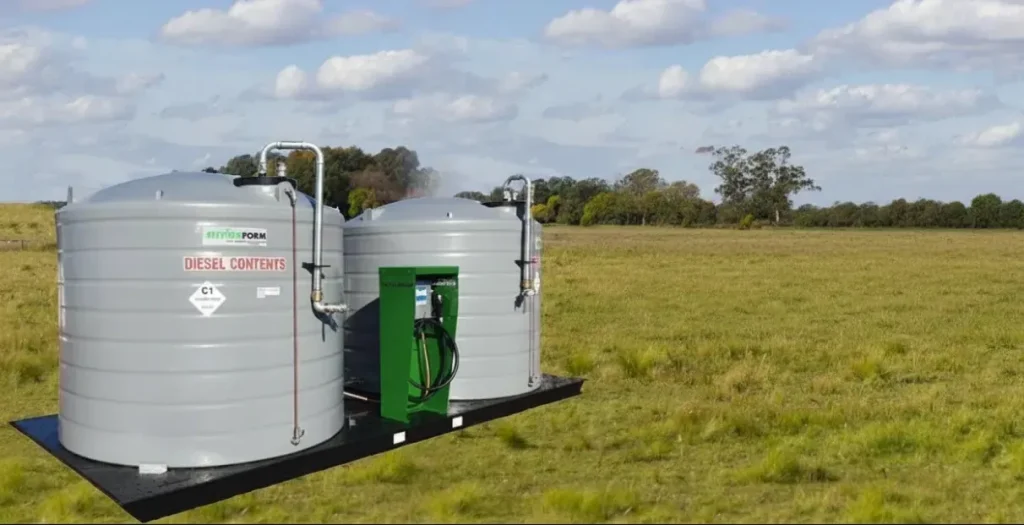
- Will you be manually transferring fuel, or do you need a proper dispensing setup?
- Do you need a pump, hose or nozzle included?
- Will multiple staff members be using the tank?
- Are you trying to make refuelling faster, cleaner and easier?
A diesel tank isn’t just a container. In many operations, it becomes part of the daily workflow. If the setup is
awkward to use, difficult to access or not suited to the way your team works, it can become a frustration very
quickly.
Sometimes the right solution isn’t just a bigger tank — it’s a better setup overall.
4. Consider Refill Frequency, Not Just Storage Capacity
When choosing a diesel tank, it’s easy to focus on litres alone. But it’s just as important to think about how
often you can realistically refill it.
For example:
- If diesel deliveries to your area are frequent and reliable, you may not need as much storage.
- If you’re in a remote location or delivery schedules are harder to control, extra capacity can help reduce
downtime and avoid supply issues. - If your business has busy seasons where fuel use jumps significantly, a larger setup may make more
sense than it would during quieter periods.
A good diesel storage solution should support your workflow — not leave you scrambling for fuel during your
busiest weeks.
5. Think About the Future, Not Just Today
A diesel tank should be a long-term asset, not something you outgrow straight away
Before making a decision, it’s worth asking:
- Is the business likely to grow over the next 12–24 months?
- Will you be adding more machinery, vehicles or staff?
- Are you planning to expand operations or add another site?
You don’t necessarily need to overbuild for the sake of it, but it’s worth choosing a setup that still makes sense
if your workload increases or your operation changes.
6. Make Durability Part of the Decision
A diesel tank might look fine on paper, but if it doesn’t suit the conditions it’s going into, it can quickly become
the wrong choice.
In Australian agriculture and industry, products often need to handle:
- Harsh sun and heat
- Outdoor exposure
- Rough day-to-day use
- Busy work areas with machinery moving around them
- Demanding farm and industrial conditions
That’s why build quality matters.
Not all tanks are made the same, and not every option on the market is designed with the same level of
durability or practical use in mind. When comparing options, it’s worth looking beyond the price tag and asking
how the tank is built, what it’s designed for, and whether it’s suited to real operating conditions.
7. Don’t Choose a Diesel Tank in Isolation from the Rest of Your Operation
The best diesel tank setup is the one that works with the bigger picture of how your business runs.
That means thinking about things like:
- Where machinery or vehicles are refuelled
- How staff access the tank
- Whether the setup creates bottlenecks
- Whether the location is practical for daily use
- Whether you need room to expand later
Sometimes a diesel tank isn’t just a product purchase — it’s an operational decision. The right setup can save
time every week, reduce hassle for your team and make fuel handling more straightforward across the board.
8. If You’re Unsure, Start with the Use Case — Not the Product
If there’s one piece of advice we’d give, it’s this:
Don’t start by asking, “Which tank should I buy?”
Start by asking, “What do I actually need this setup to do?”
Once you understand:
- how much diesel you use
- where the tank will be located
- how often it’ll be accessed
- whether you need storage only or a dispensing setup
- and what your business may need in the near future
…it becomes much easier to narrow down the right option.
Choosing the Right Diesel Tank Shouldn’t Be Guesswork
A diesel tank is one of those purchases that’s easy to underestimate until it becomes part of your daily
operation.
Get it right, and it makes life easier.
Get it wrong, and it can create ongoing inconvenience, wasted time and unnecessary cost.
At Enviroform, we work with farms, contractors and businesses looking for diesel storage solutions that are
practical, durable and built for real Australian conditions. Whether you know exactly what you need or you’re
still weighing up the right setup, we’re always happy to have a conversation and help point you in the right
direction.
Need help choosing the right diesel tank?
If you’re planning a new diesel setup or upgrading an existing one, our team can help you work through the
options.
To get started, it helps to know:
- What the tank will be used for
- Your approximate fuel usage
- Whether it’ll stay in one location or move around
- And where you’re located
Get in touch with Enviroform today to discuss the right diesel storage solution for your farm or business.
Frequently asked questions
What size diesel tank do I need for my farm or business?
The right size depends on how much fuel you use, how often you refill, and how many vehicles or machines are being fuelled from the tank. It’s best to choose a tank based on actual usage and workflow rather than guessing based on capacity alone.
Should I choose a larger diesel tank just in case?
Not always. A larger tank can be useful if you have high fuel usage, seasonal demand or limited access to regular fuel deliveries. But the best option is one that fits your operation without paying for unnecessary capacity.
Do I only need diesel storage, or a full dispensing setup?
That depends on how your operation handles fuel. Some businesses only need storage, while others benefit from a more complete setup with pumps, hoses and dispensing equipment to make refuelling faster and more practical.
What should I consider before buying a diesel tank?
Key things to think about include your weekly fuel usage, refill frequency, tank location, access for vehicles or machinery, future growth, and whether the tank will be used in a fixed or mobile setup.
Can Enviroform help me choose the right diesel tank?
Yes. If you tell us a bit about your operation, fuel usage and what you need the setup to do, our team can help point you towards a practical diesel storage solution.